
Japchae (Sweet Potato Glass Noodles): 5 Flavorful Secrets
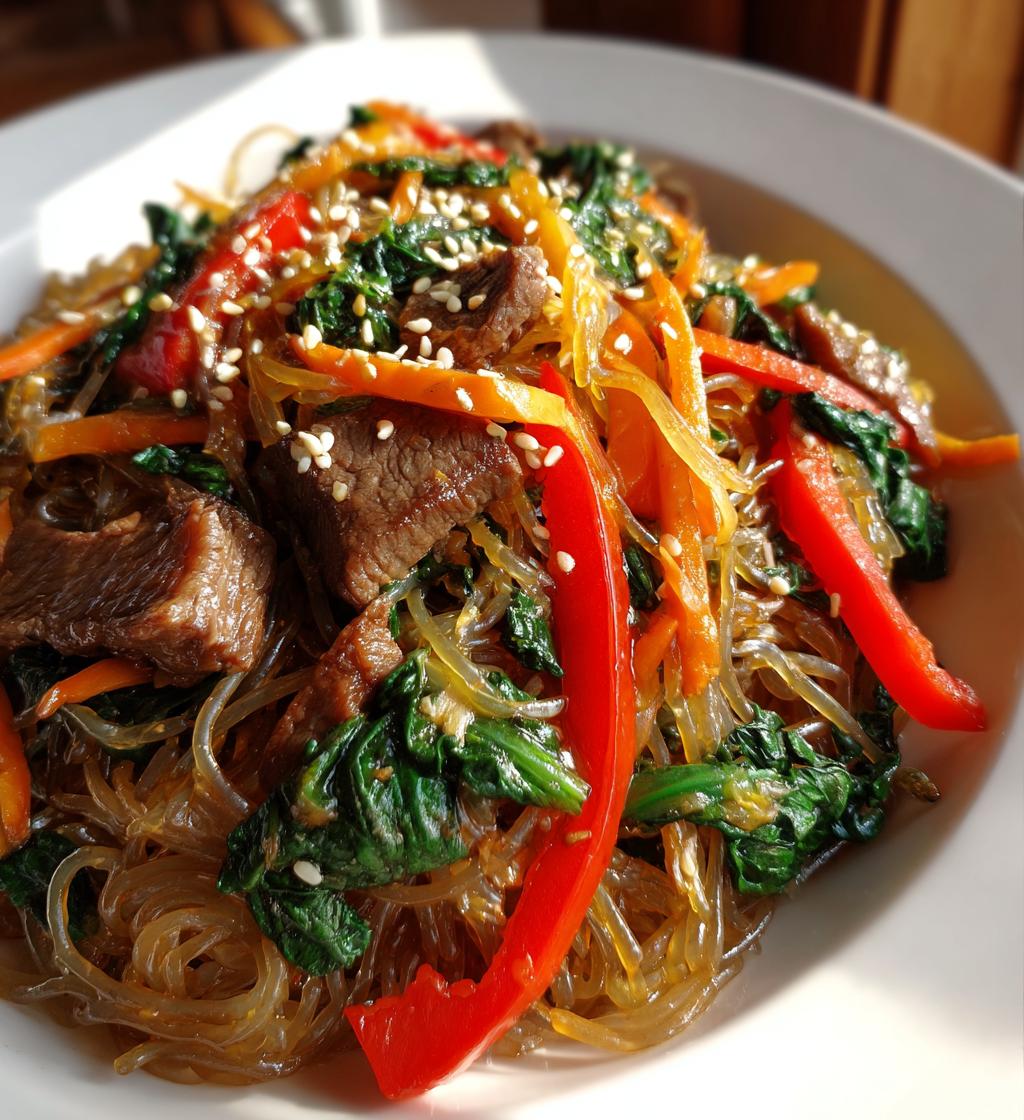
Oh my goodness, have you ever tried Japchae? It’s this amazing Korean dish that’s just bursting with flavor! Made from sweet potato glass noodles, it’s a delightful mix of chewy, savory, and slightly sweet. I remember the first time I had it at a friend’s family gathering; the aroma wafted through the air, and I knew I had to learn how to make it myself. Now, it’s a staple in my kitchen! It’s so versatile, too—I love throwing in whatever veggies I have on hand. Trust me, once you try it, you’ll want to whip it up for every occasion. Whether it’s a cozy weeknight dinner or a festive celebration, Japchae always impresses! Let’s dive into how you can make this delicious dish at home!
Ingredients List
- 200g sweet potato glass noodles: These are the star of the show! They have that wonderful chewy texture that makes Japchae so special. You can usually find them in Asian grocery stores or online.
- 100g beef, sliced: I like to use tender cuts like sirloin or ribeye for the best flavor. Slice it thinly against the grain for super tender bites.
- 1 carrot, julienned: This adds a lovely crunch and sweetness. Just slice it into thin matchsticks for even cooking.
- 1 bell pepper, sliced: Use any color you love! I usually go for red or yellow because they’re sweeter and brighten up the dish.
- 1 onion, sliced: A medium onion will do just fine! It adds depth and sweetness as it cooks down.
- 2 cups spinach: Fresh spinach is perfect here. It wilts beautifully and adds a nice pop of color and nutrition.
- 3 tablespoons soy sauce: This brings that rich umami flavor. I use low-sodium soy sauce to keep it balanced.
- 2 tablespoons sesame oil: This is what gives Japchae its signature nutty aroma. Trust me, don’t skimp on this!
- 1 tablespoon sugar: Just a touch to balance the flavors. You can adjust this based on your taste, of course!
- 2 cloves garlic, minced: Fresh garlic is a must! It adds a wonderful aroma and flavor that makes everything better.
- 1 tablespoon sesame seeds: These are for garnish, adding a nice crunch and a hint of nuttiness on top.
How to Prepare Japchae
Alright, let’s get down to the nitty-gritty of making this delicious Japchae! It’s a straightforward process, and I promise you’ll be enjoying a bowl of this goodness in no time. Just follow these steps, and don’t forget to have fun in the kitchen!
Step 1: Soaking the Noodles
First things first, we need to soak the sweet potato glass noodles. Grab a bowl and fill it with warm water—just not boiling, okay? You’ll want the noodles to soak for about 30 minutes. This softens them up and makes them perfect for stir-frying later. Trust me, you want that chewy texture!
Step 2: Sautéing the Garlic and Beef
While the noodles are soaking, let’s get some flavor going! Heat a tablespoon of sesame oil in a large skillet over medium heat. Once it’s hot, toss in the minced garlic and sauté for about 30 seconds until it’s fragrant—oh, the smell is divine! Then, add in your sliced beef. Cook it for about 3-4 minutes, stirring occasionally, until it’s browned and cooked through. You want it to be tender and flavorful, so don’t rush this step!
Step 3: Stir-Frying the Vegetables
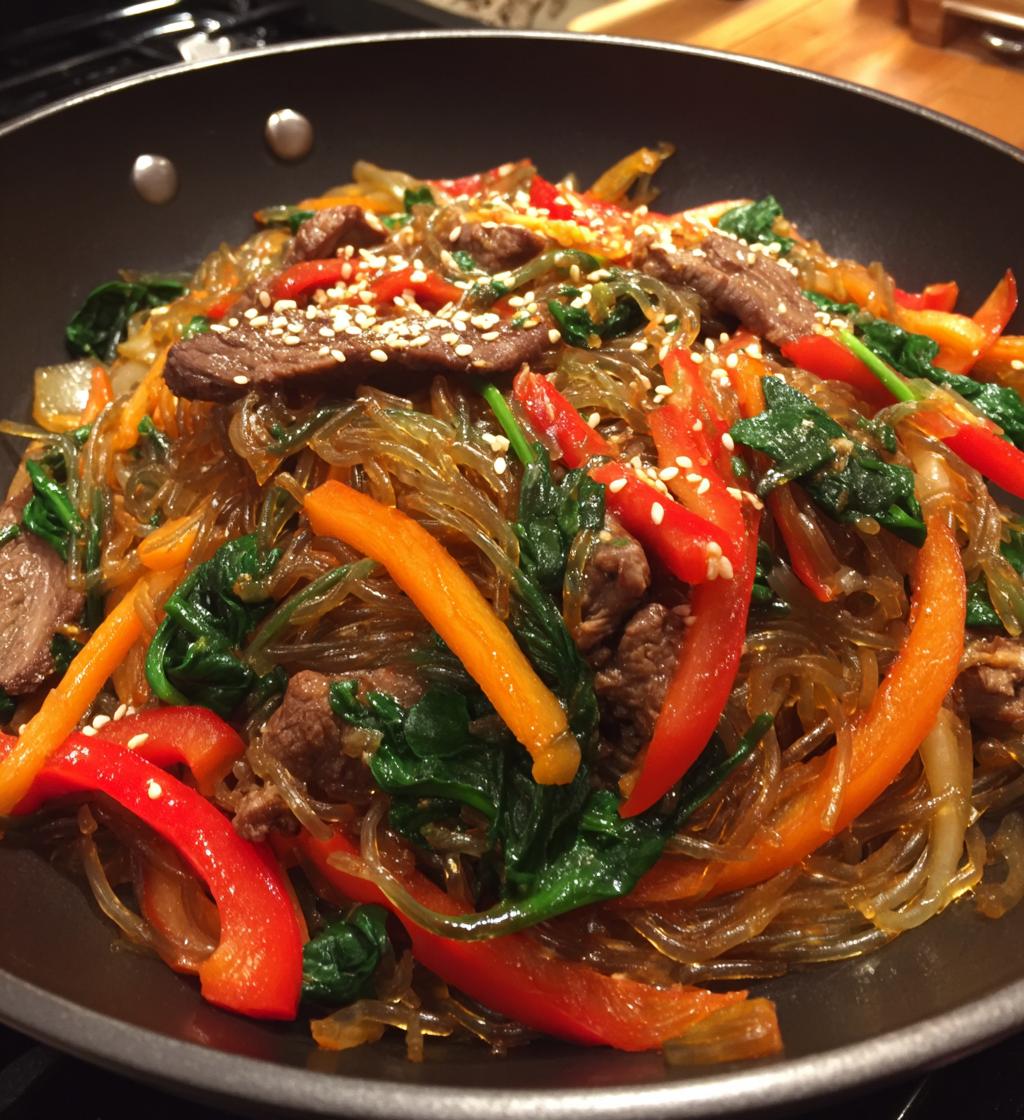
Now, let’s amp up the veggies! Add the sliced onions, julienned carrots, and bell peppers to the pan. Stir-fry them for about 5 minutes until they’re tender but still crisp. This is where the colors start to pop, and you’ll feel like a culinary artist! Finally, toss in the fresh spinach and cook it until it wilts down, which will take just a minute or so.
Step 4: Combining Noodles and Sauce
Once the spinach is wilted, it’s time to bring everything together! Drain the soaked noodles and add them straight to the pan. Pour in the soy sauce and sprinkle the sugar over the top. Now, here’s the fun part: gently mix everything together! Use tongs or chopsticks to toss the noodles and veggies until they’re evenly coated. This is crucial for that delightful flavor in every bite.
Step 5: Final Cooking and Garnishing
Let everything cook together for an additional 3-5 minutes, stirring frequently to ensure nothing sticks to the bottom. You want the noodles to absorb all those delicious flavors! Once it’s all heated through, remove it from the heat and sprinkle those sesame seeds on top for a little crunch. And voila, your Japchae is ready to shine on the dinner table!
Why You’ll Love This Recipe
- Quick to Prepare: With just 30 minutes of soaking and 15 minutes of cooking, you can have a delicious meal on the table in under an hour!
- Full of Flavor: Each bite is a harmonious blend of savory, sweet, and nutty flavors that will have you coming back for seconds.
- Healthy Ingredients: Packed with fresh vegetables and lean protein, Japchae is a nutritious option that doesn’t skimp on taste.
- Customizable: Feel free to mix and match your favorite veggies or proteins—it’s a great way to clean out your fridge!
- Gluten-Free: Made with sweet potato glass noodles, this dish is perfect for those with gluten sensitivities.
- Impressive Presentation: The vibrant colors of the vegetables make Japchae a stunning centerpiece for any meal or gathering.
Tips for Success
Now that you’re ready to dive into making Japchae, let me share some of my favorite tips to ensure it turns out perfectly every single time!
- Don’t Rush the Soaking: Properly soaking the sweet potato glass noodles is key! Make sure they soak for the full 30 minutes to get that lovely chewy texture. If they’re still a bit stiff after soaking, give them a quick rinse in warm water before adding them to the pan.
- Adjust the Soy Sauce: Taste as you go! Depending on your preference, you might want to tweak the amount of soy sauce. Start with the suggested amount and add more if you like it saltier—just be careful not to overpower the other flavors.
- Mix the Noodles Gently: When combining everything, be gentle! You want to toss the noodles with the veggies without breaking them. A pair of tongs or chopsticks works wonders here. It’s all about that even coating!
- Add More Veggies: Feel free to get creative! If you have other veggies lying around—like mushrooms, zucchini, or even broccoli—throw them in! Just remember to chop them into similar sizes for even cooking.
- Use High Heat for Stir-Frying: When stir-frying, make sure your pan is hot enough. This helps to lock in the flavors and gives your veggies that delightful crisp-tender texture. If you feel it’s getting too crowded in the pan, don’t hesitate to cook in batches!
- Storage for Leftovers: If you happen to have leftovers (which is rare, trust me!), store them in an airtight container in the fridge. They’ll keep for about 2-3 days. Just give them a quick reheat in the pan, adding a splash of water to help revive that moisture.
With these tips in mind, you’ll be a Japchae pro in no time! Get ready to impress your family and friends with this delicious Korean classic!
Variations of Japchae
One of the best things about Japchae is how versatile it is! You can totally make it your own by switching up the ingredients. Here are some fun ideas to get your creativity flowing:
- Vegetable Medley: Feel free to add or swap in any veggies you love! Try mushrooms for an earthy flavor, zucchini for a bit of crunch, or even snap peas for a touch of sweetness. Just remember to cut them to a similar size for even cooking.
- Protein Power: While beef is my go-to, you can easily substitute it with chicken, pork, or even tofu for a plant-based option. Just make sure to cook it thoroughly before adding the veggies. If you’re feeling adventurous, try using shrimp for a delightful seafood twist!
- Spicy Kick: If you enjoy a little heat, add some gochujang (Korean chili paste) or sprinkle in some red pepper flakes while stir-frying. This will elevate the dish and give it an exciting flavor boost!
- Sweet and Savory: Experiment with different types of sweeteners! Instead of sugar, try honey or maple syrup for a unique twist. It adds a lovely depth of flavor that complements the savory notes beautifully.
- Nutty Goodness: For an extra nutty crunch, toss in some chopped cashews or almonds just before serving. It adds a delightful texture and a new flavor dimension that pairs perfectly with the soft noodles.
- Herb Infusion: Fresh herbs can take your Japchae to the next level! Add chopped green onions or cilantro right before serving for a fresh, vibrant finish. You can even mix in some basil for an unexpected flavor pop!
With these variations, you can keep Japchae exciting and tailored to your tastes. Enjoy experimenting and creating your own signature version of this amazing dish!
Nutritional Information
Now, let’s talk about the nutritional goodness of Japchae! Each serving is not only delicious but also packed with nutrients, making it a great choice for a wholesome meal. Here’s a breakdown of the typical nutritional values per serving:
- Serving Size: 1 cup
- Calories: 350
- Sugar: 5g
- Sodium: 800mg
- Fat: 10g
- Saturated Fat: 2g
- Unsaturated Fat: 8g
- Trans Fat: 0g
- Carbohydrates: 55g
- Fiber: 3g
- Protein: 15g
- Cholesterol: 30mg
Keep in mind that these values are estimates based on standard ingredients and serving sizes. Depending on your specific ingredients and any variations you choose, the nutritional content might vary slightly. But overall, you can feel good about enjoying a hearty bowl of Japchae!
FAQ Section
Can I make Japchae ahead of time?
Absolutely! Japchae tastes even better the next day as the flavors have time to meld together. Just store it in an airtight container in the fridge, and when you’re ready to eat, simply reheat it in a pan with a splash of water to revive that lovely texture.
How do I store leftovers?
If you have any delicious leftovers, make sure to let them cool down first. Then, transfer them to an airtight container and pop them in the fridge. They’ll stay fresh for about 2-3 days. Just remember to reheat gently to avoid overcooking the noodles!
What kind of noodles can I use if I can’t find sweet potato glass noodles?
If sweet potato glass noodles are hard to find, you can use other types of noodles, like rice noodles or even regular spaghetti in a pinch. The texture will be a bit different, but it’ll still be tasty!
Can I freeze Japchae?
While I recommend enjoying Japchae fresh, you can freeze it if you have leftovers. Just make sure to store it in a freezer-safe container. When you’re ready to enjoy, thaw it in the fridge overnight and reheat it on the stove.
How can I make Japchae vegetarian?
You can easily make a delicious vegetarian version by omitting the beef and adding more veggies or even tofu for protein. Just be sure to adjust the cooking time accordingly so everything is perfectly tender!
Can I add different proteins to my Japchae?
Of course! Japchae is super versatile. You can substitute beef with chicken, pork, shrimp, or even keep it plant-based with tofu. Just make sure to cook the proteins thoroughly before adding the veggies.
What if I want my Japchae spicier?
If you like a little heat, feel free to add some gochujang (Korean chili paste) or sprinkle in some red pepper flakes while stir-frying. This will give your Japchae an exciting kick!
Is Japchae gluten-free?
Yes! Since it’s made with sweet potato glass noodles, Japchae is naturally gluten-free. Just double-check your soy sauce to ensure it’s gluten-free as well. Enjoy!
Serving Suggestions
Now that you’ve got this delicious Japchae ready to go, let’s talk about what to serve alongside it to elevate your meal experience! Trust me, the right accompaniments can really take your dinner to the next level.
- Korean Fried Chicken: For a truly indulgent feast, pair your Japchae with crispy Korean fried chicken. The crunchiness of the chicken complements the chewy noodles perfectly!
- Kimchi: A side of spicy kimchi adds a fantastic zing and a probiotic boost to your meal. The tangy flavors work so well with the savory notes of Japchae.
- Steamed Rice: If you want something simple, serve Japchae over a bed of fluffy steamed rice. It’s a great way to soak up all those delicious flavors!
- Vegetable Pancakes: Try adding some savory vegetable pancakes (Pajeon) to your spread. They’re crispy, flavorful, and a delightful pairing with the noodles.
- Soup: A light Korean soup, like miso or a simple vegetable broth, can be a lovely starter. It warms you up and balances the meal beautifully.
- Fresh Salad: A crisp salad with a sesame dressing can add a refreshing touch. Use mixed greens, cucumber, and radishes for a burst of color and crunch!
With these suggestions, you’ll have a well-rounded meal that’s sure to impress! Enjoy your Japchae and happy cooking!
Print
Japchae (Sweet Potato Glass Noodles): 5 Flavorful Secrets
- Total Time: 45 minutes
- Yield: 4 servings 1x
- Diet: Gluten Free
Description
Japchae is a Korean dish made from sweet potato glass noodles stir-fried with vegetables and meat.
Ingredients
- 200g sweet potato glass noodles
- 100g beef, sliced
- 1 carrot, julienned
- 1 bell pepper, sliced
- 1 onion, sliced
- 2 cups spinach
- 3 tablespoons soy sauce
- 2 tablespoons sesame oil
- 1 tablespoon sugar
- 2 cloves garlic, minced
- 1 tablespoon sesame seeds
Instructions
- Soak the sweet potato noodles in warm water for 30 minutes.
- In a pan, heat sesame oil and sauté garlic until fragrant.
- Add beef and cook until browned.
- Add onions, carrots, and bell peppers; stir-fry for 5 minutes.
- Add spinach and cook until wilted.
- Drain the noodles and add to the pan.
- Pour in soy sauce and sugar; mix well.
- Cook for an additional 3-5 minutes, stirring frequently.
- Garnish with sesame seeds before serving.
Notes
- Adjust the sugar based on your taste.
- Add more vegetables as desired.
- Prep Time: 30 minutes
- Cook Time: 15 minutes
- Category: Main Dish
- Method: Stir-fry
- Cuisine: Korean
Nutrition
- Serving Size: 1 cup
- Calories: 350
- Sugar: 5g
- Sodium: 800mg
- Fat: 10g
- Saturated Fat: 2g
- Unsaturated Fat: 8g
- Trans Fat: 0g
- Carbohydrates: 55g
- Fiber: 3g
- Protein: 15g
- Cholesterol: 30mg
Keywords: Japchae, Sweet Potato Noodles, Korean Dish